

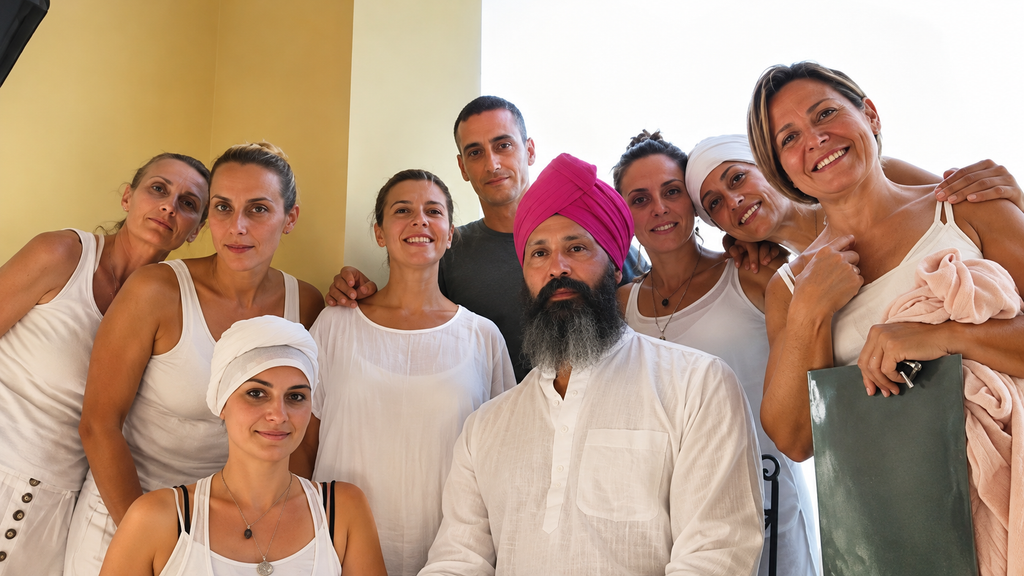
Sadhana Singh found Kundalini Yoga by accident, and he has spent three decades helping others find it on purpose. A lead trainer, author and counselor based in Italy, he has taught and trained teachers around the world, and he believes the best teaching comes from perception and presence, not from memorized knowledge.
We sat down with him for IKYTA’s Teacher Spotlight to hear how it all began. What he shared is part love story, part field guide for anyone who teaches, and it carries a clear message for certified and aspiring teachers: be yourself, stay present, and never be shy about what you offer.
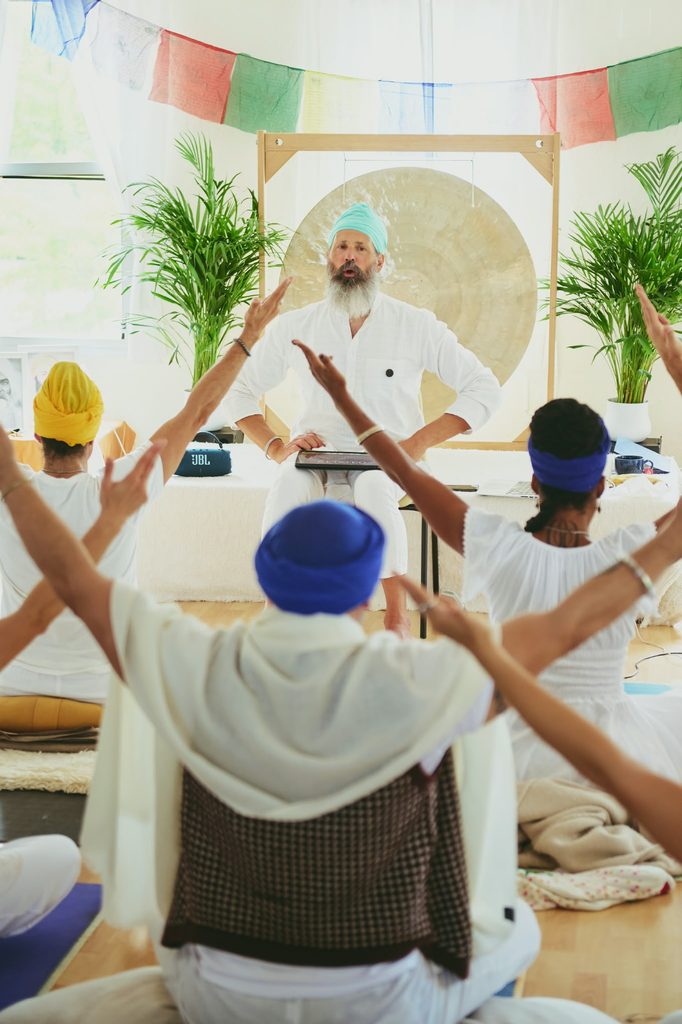
How Sadhana Singh Found Kundalini Yoga
His story starts in his mid-twenties, in a life that looked full from the outside. He worked in fashion and film and stayed busy, yet something inside felt lost. He read about esotericism and Buddhism, searching for a thread to hold. Then, during an acting workshop, the group was asked to do some pranayama to music. He did not know it was yoga, let alone Kundalini Yoga.
Hours later a deep release arrived, and for two or three days he felt something both familiar and shocking. A first yoga class elsewhere was pleasant but nothing like it. Then a friend who practiced Kundalini Yoga took him to meet a teacher, a psychologist who had stopped teaching. She played the same music from the workshop, and Sadhana knew he had found his place.
He persuaded her to teach again, and she agreed on one condition: his commitment. For a year, two or three times a week, the small group practiced together, and Sadhana remembers it as unbelievably transformative. Before long, in a country with very few teachers, he was teaching too.
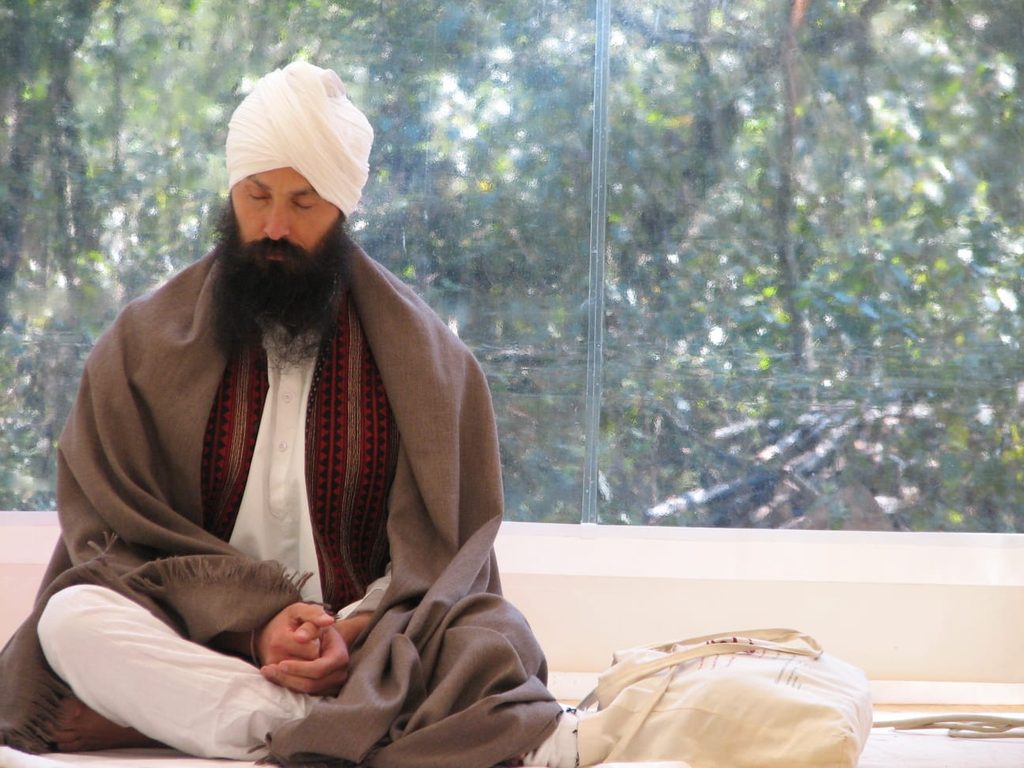
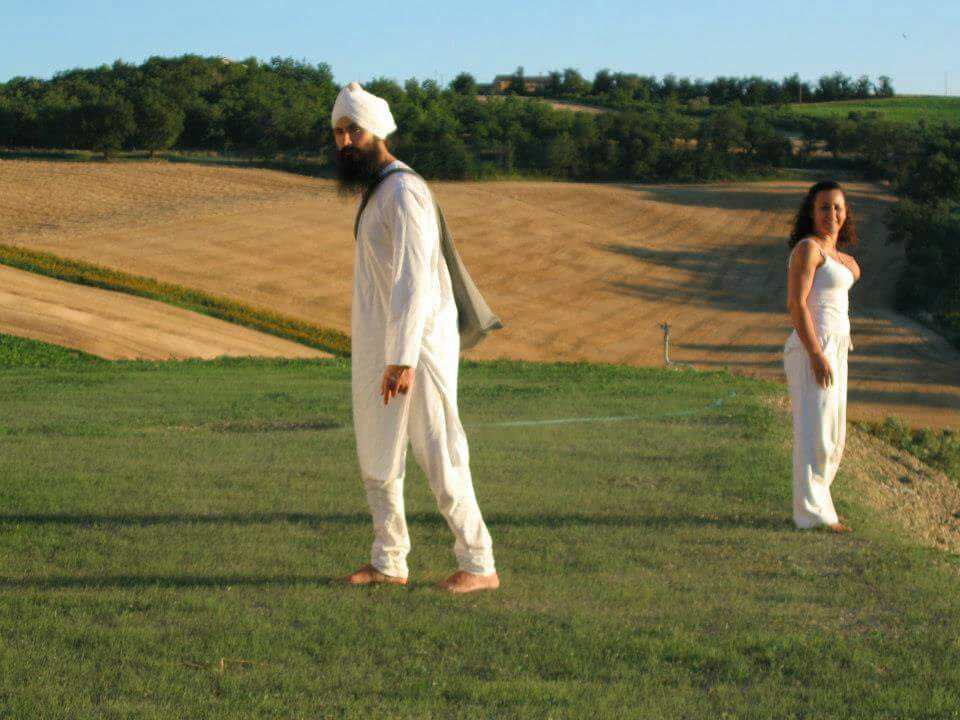
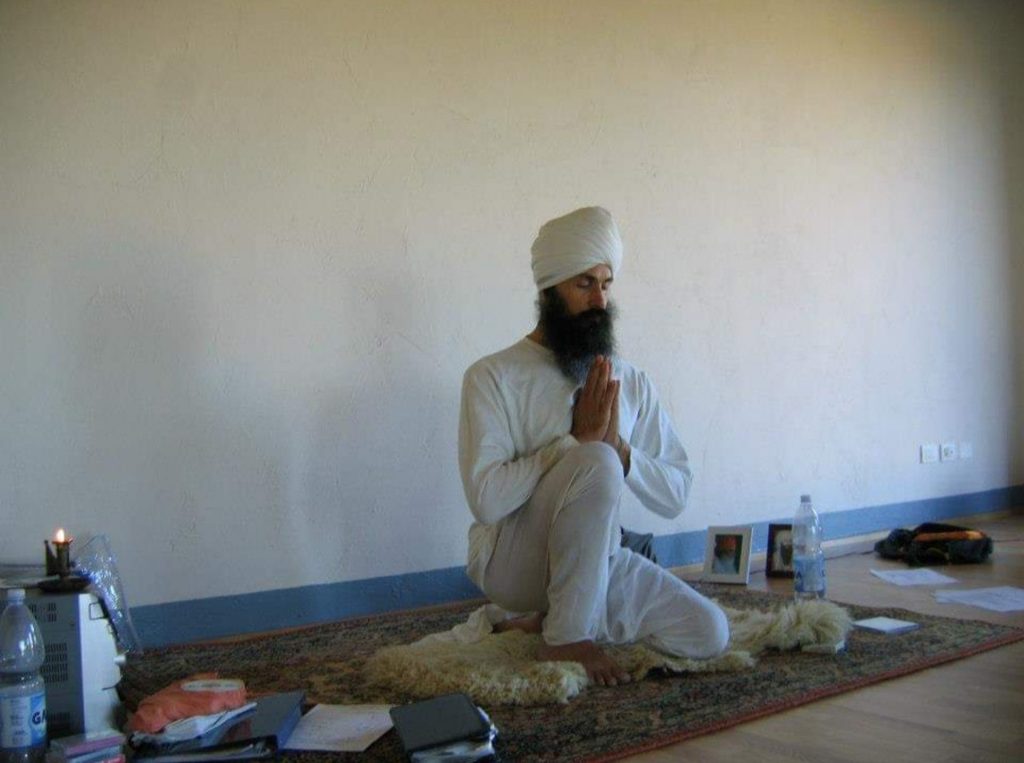
Ten Years at Yogi Bhajan’s Side
A workshop with Yogi Bhajan in Rome changed the scale of everything. Sadhana still remembers the exercises, and above all a presence that showed him what a person with a mission could look like. A week-long Master’s Touch course in Assisi followed, where Yogi Bhajan spoke as someone passing the work to a new generation of teachers. Sadhana was soon recognized by IKYTA through the “grandfathering” process, and he helped build the association in Italy.
From then on he traveled to be near him. The relationship, he says, was tough and loving in the same breath. Yogi Bhajan counseled him, often in a room full of people, and Sadhana later understood that the counseling was also a lesson in how to counsel. Letters crossed the world between visits, sometimes taking months, always full of love and always straight, with one aim: to push him to be himself.
Those ten years, until 2004, remain the most overflowing experience of love in his life. Along the way, Guru Dev Singh became a second master and Tarn Taran Singh a grandfather-like mentor.
A Lifelong Student of the Teachings
Sadhana has always gone deep before he teaches. Early on he chose specific subjects and studied them thoroughly before offering them to students. He worked through the book The Mind, then spent four years on the mind meditations, forty days at a time. Today he keeps studying Yogi Bhajan’s lectures and kriyas in an organized way, because for him, studying means nourishing himself at the source. His compass is a simple line:.
Learn it as a science, and teach it as an art.
— Sadhana Singh
That research feeds his books and the KRI specialty courses he developed, from the science of essence for self-realization to Kundalini Yoga counseling. All of it lives within Anter Vidya, the institution he founded.
Taking the Teachings Beyond the Studio
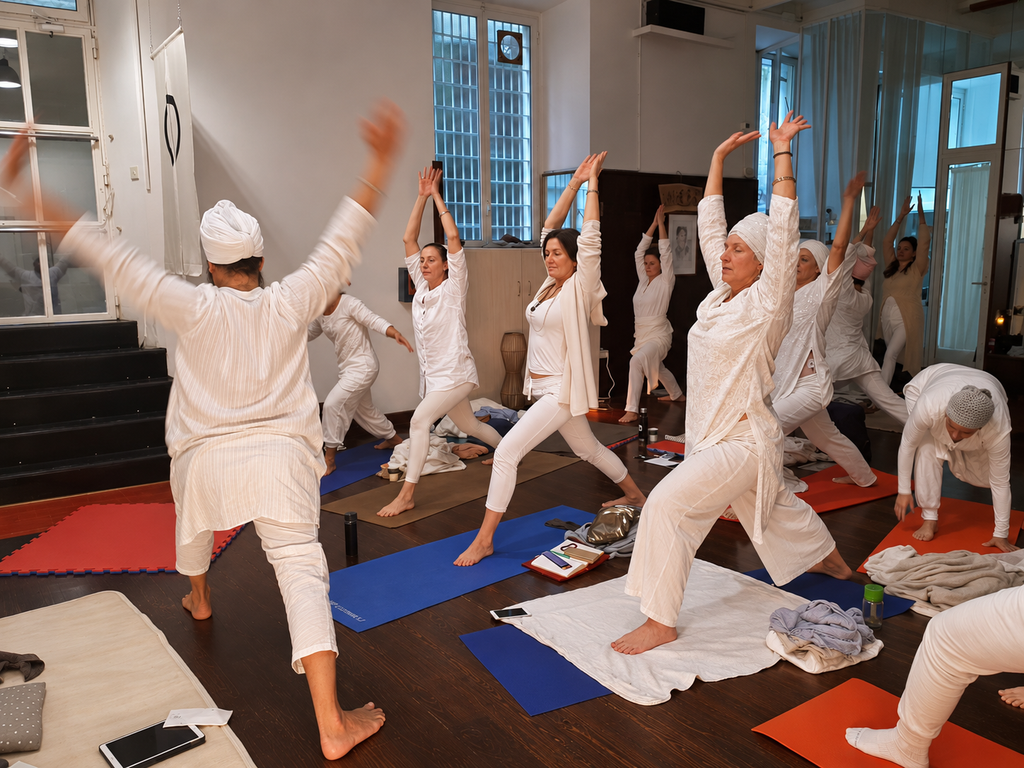
Sadhana noticed early that a yoga center is a comfort zone, because students arrive with expectations. So he took his classes into corporations, rehab centers and prisons. His advice to any teacher who wants to grow is simple: go out, take the risk and do not be shy. When you return to your regular class, you simply relax and flow, because you have already faced harder rooms.
He also asks teachers to make peace with what they teach. Whether you are presenting a mantra or a theory, you should have no problem with it, because students feel it right away when you do. His invitation is to try to be yourself, always, and to let that be the teaching.
Yogi Bhajan also pushed him to see himself as a leader, so he went on to teach leadership and success. A company now does this work with corporations and the public, and he trains the teachers who deliver it. He also built a school of Kundalini Yoga counseling, based on Yogi Bhajan’s example, and he believes every teacher should be able to counsel. In his experience, students who counsel with him show more focus, more commitment and a closer bond with the teacher.
Teach from Perception, Not Knowledge
Asked about the biggest challenge of his career, Sadhana answers with humility. A teacher who stops refining their perception stays inside one belief system, he explains, and the fewer belief systems you carry, the better you teach. You cannot impose what you think you know on a student. Every person should surprise you, otherwise class becomes a recited structure of chakras, raised arms and breaths.
For the same reason, he warns against simply piling up knowledge. Even after decades, he opens his iPad to check a kriya before teaching it. Knowing every detail by heart is not the point. The point is to read what is happening in the room and then choose the right remedy.
What is important is your capacity to sense the reality that is happening at the moment, and with your neutrality, you can find a way through.
— Sadhana Singh
Show Up, Deliver, and Let the Rest Follow
His own example is demanding. At one point he taught 13 classes a week, in parks and anywhere people gathered, sleeping in the car between venues. He remembers a place where he taught for eleven years, and for two of them the room was almost empty: one, two or three students, and sometimes nobody. He kept showing up anyway. In the end, about 100 people from that place went on to complete the teacher training and became Kundalini Yoga teachers. A teacher, he says, offers presence and continuity.
He worries that many teachers today teach very little. Keep teaching, he says, reach out, and you will grow. Later, once you are busy, you can teach fewer classes and invite students to others. He also reminds newcomers that every beginning includes humble work, and that the willingness to do it is part of the path.
Things have changed since 2020, he observes. Teachers are now judged by what they deliver, not by where they come from. Each teacher represents the house, rather than the house representing the teacher. That asks for more service, more trust, and real results in less time, not promises that a kriya will make you beautiful and prosperous. His practical advice is to keep practicing Kundalini Yoga yourself and go within.
Above all, he asks for patience. There is a process, he says, and it is neither fast nor instant. If you keep practicing, keep being honest and keep teaching, things will flow.
Sadhana Singh on Teaching with Your Whole Presence
One of his favorite stories involves his young son. While attending classes in Los Angeles years ago, the boy told his father that he and one of the teachers smelled alike. The remark stayed with him. Sadhana now believes that the nervous and glandular systems release a fragrance that reflects whether someone dwells in the neutral mind.
For a teacher, he says, that is part of the power of attraction and projection: a student remembers the same experience each time they think of you. He applies the same idea to visibility. He prefers newsletters and mailing lists to social media, and he recalls Yogi Bhajan telling him to stay home and meditate, because the world would come to know him. If you are who you are, people will know you, even if they have never seen your face before.
That does not mean hiding. Two students from Chile met him at a yoga festival in Europe and later took his second-level course, so showing up still matters. But the foundation, he insists, is not a peak of attention. It is the quality of the teacher who stands in front of the room.
Prosperity Is Part of the Teaching
Sadhana wants new teachers to know that they can earn their living from teaching, as long as they do not teach for the money. Students sponsor the time you spend studying, researching and preparing, so you should ask enough to support your project. He lives by this idea: teaching has given him everything he needs, and he feels protected by it.
He also believes teachers should be examples of prosperity, and he defines it as more than money: the presence of spirit that prevails over everything and tunes in to the abundance of the universe. Yogi Bhajan left teachers a resource they can draw on every day, and Sadhana thinks it can be shared far beyond yoga studios, in companies, churches and even politics.
Perhaps that is why he speaks so firmly about the future. Every theory and every kriya, he says, is priceless, and a legacy like this cannot be allowed to fall.
A Practice He Keeps Returning To
As he grows older, Sadhana likes to go back to the basics. He has returned to Shabd Kriya, a meditation he practiced when he was young, and he now recommends it to everyone. He loves it because it is clear, credible and demanding, and because it is not difficult to begin.
In his experience, its effects reach well beyond the meditation itself. It re-establishes the neutral mind, opens the heart and brings a longer vision, the kind of perspective that helps with prosperity too. Above all, it teaches a person to live with the cycles of life: sometimes things go well, sometimes they do not, and the practice helps you stay stable through both. That is how he describes sadhana, as learning to navigate the ups and downs without losing your center.He also suggests doing it in full. Fifteen minutes will help, he says, but sixty-two minutes brings you back to reality.
The same is true of the simplest exercises. Basic spinal flexes, he says, can do far more than people expect. Yogi Bhajan left thousands of lectures and kriyas, which means different angles for different people and different moments, and Sadhana loves many of them. But what makes the difference, he insists, is the approach more than the technique. So when he teaches, he shares the exercise, and also how to come to it.
Sadhana Singh’s Reminders for Teachers
If you take only a few lines from this conversation, take these.
- Be yourself, and make peace with what you teach.
- Keep studying, but trust what you perceive in the room more than what you have memorized.
- Teach often, reach out, and stay present even when only one student comes.
- Let your impact and coherence speak, and keep practicing yourself.
- Offer service, trust and real results.
- Earn a living from teaching without teaching for the money.
Learn with Sadhana Singh
If you want to learn directly from him, his 2027 calendar is taking shape on his official website.
- Counseling Training: January to September 2027, in person and online.
- Asana Course: February to June 2027, at Center Yoga L’Arnia in Caserta.
- Teacher Training, Crystallizing the Diamond and Leadership and Success training: see his site for current dates.
- Personal counseling: available individually and for couples.
Before Your Next Class
Sadhana’s message comes down to something simple and demanding: the teachings come alive when someone embodies them. It is not the house you come from, the number of followers you have or the techniques you have memorized that people will remember. It is the way you show up, one class after another.
So before your next class, ask yourself where shyness might be holding you back, and what it would look like to teach as exactly yourself. What is one thing you could do this week to reach out, stay present or offer more service? Share your thoughts in the comments below. We would love to hear them.
