

The strength of a teacher comes from character. In short, a teacher serves students, holds the teachings with humility, and measures success by how far students grow. That character is built through daily practice, honest effort, and a commitment to teach truth
In June 1994, Yogi Bhajan spoke to Kundalini Yoga teachers about exactly this. This post gathers five of his teachings from that conference. Every quote comes straight from the transcript, and you can read the full text in the PDF below.
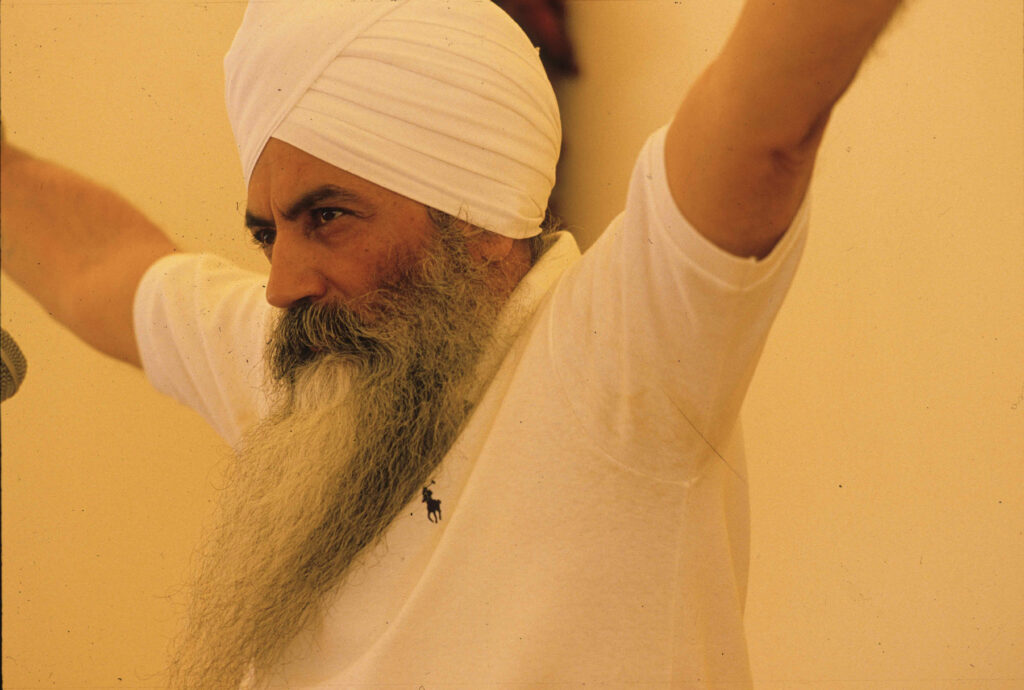
Why the Strength of a Teacher Begins After Certification
Completing training is a milestone, not a finish line. Once the diploma is in hand, the real questions begin: How do I stay inspired? How do I serve well? What does it mean to represent these teachings with integrity? IKYTA exists to support KRI-certified Kundalini Yoga teachers through exactly that long journey of growth, service, and responsibility.
The First Annual Teachers Conference gathered teachers to explore those questions with Yogi Bhajan himself. It took place on June 17 and 18, 1994. His tone was frank, sometimes humorous, and always direct.
Teachers asked about everything from money to music in class. However, his answers kept returning to one idea: the teacher matters less than what flows through the teacher. Here are five teachings that capture that idea.
Five Teachings on the Strength of a Teacher
These five passages work as reflections for your own practice. Read them slowly, one at a time.
The Teacher’s Oath
On the second day, Yogi Bhajan led the teachers in an oath. It invites the teacher to set personal weaknesses, moods, and ego aside while serving students. The point is not to erase who you are, but to place the student, not yourself, at the center of the class.
“I am not a woman, I am not a man, I am not a person, I’m not myself, I am a Teacher.”
— Yogi Bhajan, June 18, 1994
A Channel, Not the Source
A teacher can be skilled, charismatic, and well prepared, and still miss the point. Yogi Bhajan stressed that the teacher is a means and not an end. The teachings pass through you; they don’t belong to you. Moreover, that perspective is freeing, because it takes the pressure to perform off your shoulders.
“A teacher is a means, not an end.”
— Yogi Bhajan, June 17, 1994
Students Are Tomorrow’s Teachers
Strong teachers aren’t threatened by their students’ growth. Instead, they hope for it. Among the principles he shared at the close of the conference was a simple call to service: students are the teachers of the future, so nurture them well.
“Serve your students because they are your teachers for tomorrow.”
— Yogi Bhajan, June 18, 1994
Teach, Never Preach
Teaching shares an experience. Preaching tries to convince. Yogi Bhajan asked teachers to trust the practice and let it do its work, without justifying, persuading, or dramatizing. Clear, pure, honest teaching is enough.
“You just teach. Never preach.”
— Yogi Bhajan, June 18, 1994
Three Promises to Keep
On the first day, he distilled the whole conference into three commitments:
- Don’t let down yourself.
- Don’t let down your students.
- Don’t let down the teachings.
He added that if teachers keep these, God will come through. For instance, many teachers find it useful to return to this short list before class.

Read the Full Transcript
These excerpts are only a small part of two days of teaching. The complete transcript captures the questions, the humor, and the context that a short summary can’t.
In the PDF you’ll find:
- Yogi Bhajan’s answers to teachers’ questions on money, music in class, shortening sets, and teaching children
- The Teacher’s Oath and four principles for becoming a teacher
- A three-part meditation for cleaning the shushmana
- “The Theory of Reincarnation,” a short paper he wrote during the conference
Keep Growing with IKYTA
Teaching is a lifelong practice, and no teacher has to walk it alone. As a member of IKYTA, you join a global community of teachers certified by the Kundalini Research Institute (KRI) who share resources, learning, and professional standards.
If you’re a certified teacher, we’d be glad to welcome you. If you’re still in training, this teaching will be waiting for you when your certification arrives. You can also explore The 16 Facets of Perfection of a Kundalini Yoga Teacher for more on the qualities of a teacher.
Which of these five teachings speaks to you most as a teacher or student? Share it in the comments below.
