

After years of change in how Kundalini Yoga teachers are trained, five schools in South America came together to restore something increasingly difficult to replicate online: the experience of being a student together.
The way people encounter Kundalini Yoga Teacher Training has changed.
The shift had already begun before the COVID pandemic. Students were increasingly able to enter Level 1 Teacher Training with less prior experience attending Kundalini Yoga classes in person. Then COVID accelerated that transformation dramatically.
Online classes became part of everyday life, Teacher Trainings moved online or adopted hybrid formats, and people were able to participate from cities and countries where in-person access might previously have been difficult or impossible.
That accessibility opened important doors. But it also created a new reality.
- Some students now arrive at Teacher Training having practiced primarily online.
- Some have had relatively little experience regularly sitting in a physical room with an experienced teacher, practicing alongside the same community, observing how a teacher runs a class, moving through an extended kriya
- Or simply not spending enough time as a student before being asked to step into the role of teacher.
For a group of Lead Trainers in Chile and Argentina, this was becoming an important gap.
Their concern was not that Teacher Training had stopped providing knowledge, or that online learning had no place in the training process. The concern was that knowledge and certification were not always accompanied by the same amount of direct, embodied experience that had traditionally surrounded the process of becoming a teacher.
Five Schools, One Shared Responsibility
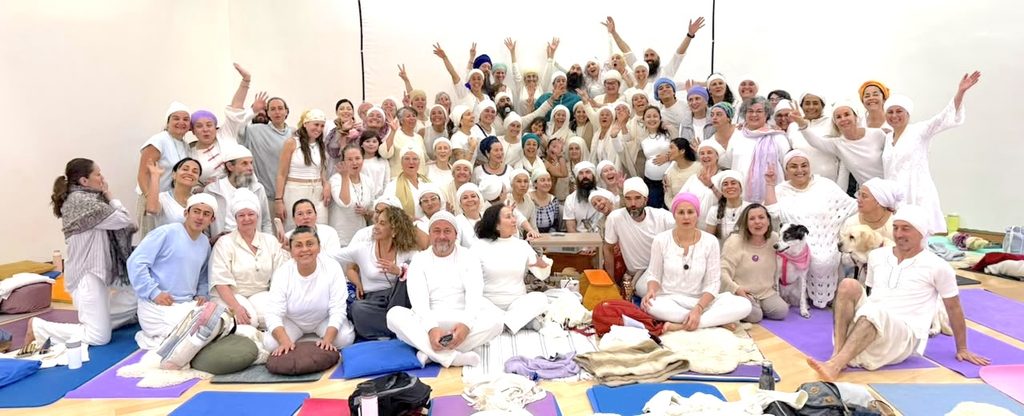
Instead of each school trying to answer that question independently, five Kundalini Yoga schools and training communities in Chile and Argentina decided to work together.
The initiative brought together:
- Narayan Yoga, Nam Nidhan Kaur;
- Dunia Yoga, with Paramsahej Singh and Siri Sat Kaur;
- Basanti Yoga, with Gurudevta Kaur and Guru Sansar Singh;
- Psicología Yóguica, with Sada Anand Singh;
- and Caminos al Infinito, with Har Tirath Kaur.
These teachers and schools have their own communities, programs, and ways of working. For the Congress, they chose to move beyond those individual structures and focus on something they all considered important: strengthening the experience and development of Kundalini Yoga teachers.
The same principle shaped the economics of the gathering. The Congress was offered at cost. It was not created as a commercial project or as a source of profit for one of the participating schools. Registration was used to cover the venue and the operational expenses required to make the gathering possible.
And the response was immediate, and it extended well beyond Chile.
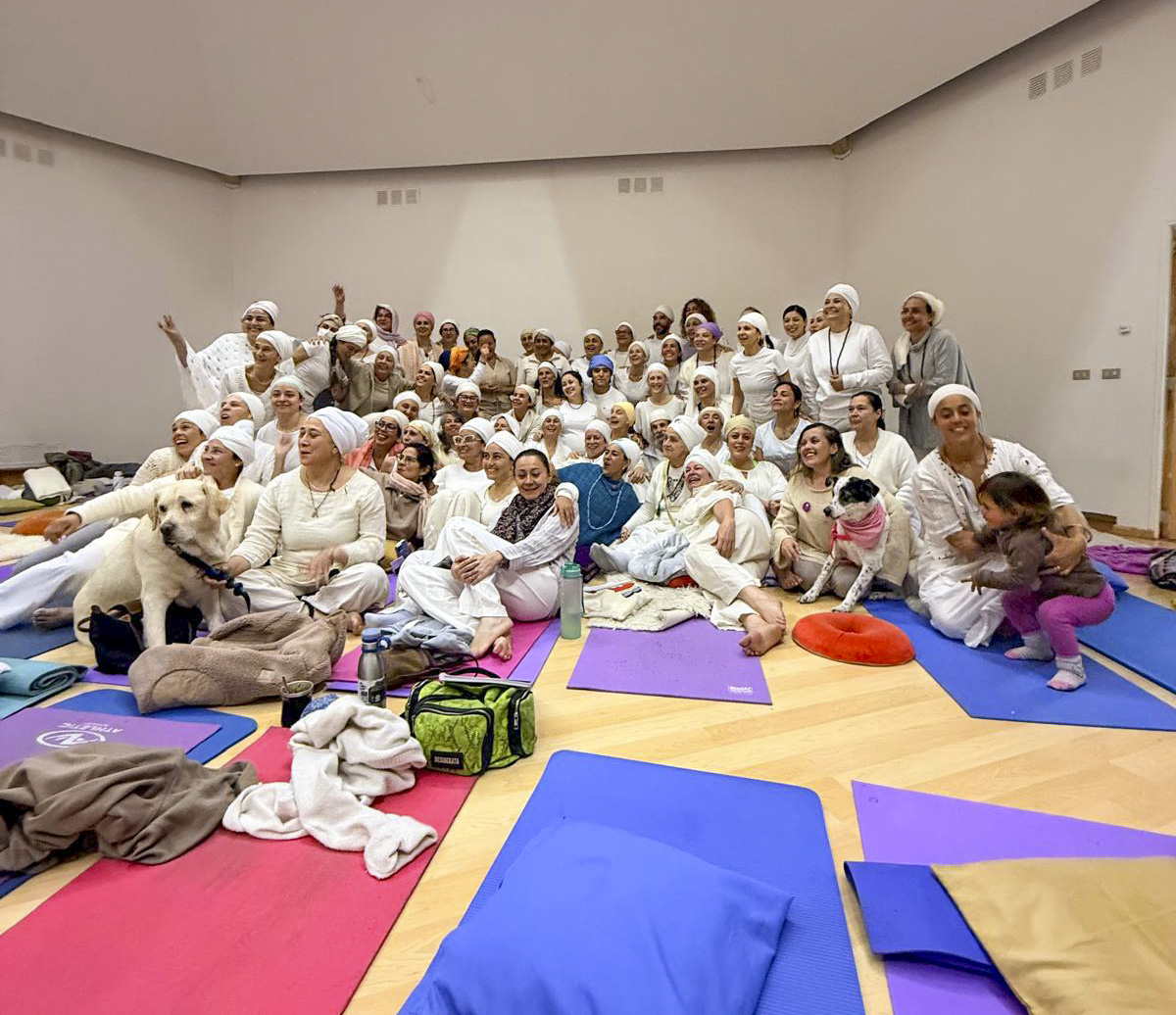
In less than three weeks, every place was taken. It reached full capacity almost as soon as it was announced.
Teachers traveled from:
- Argentina
- Brazil
- Chile
- Colombia
- Mexico
- Paraguay
- Peru
- Spain
- Switzerland
- United States
- Uruguay
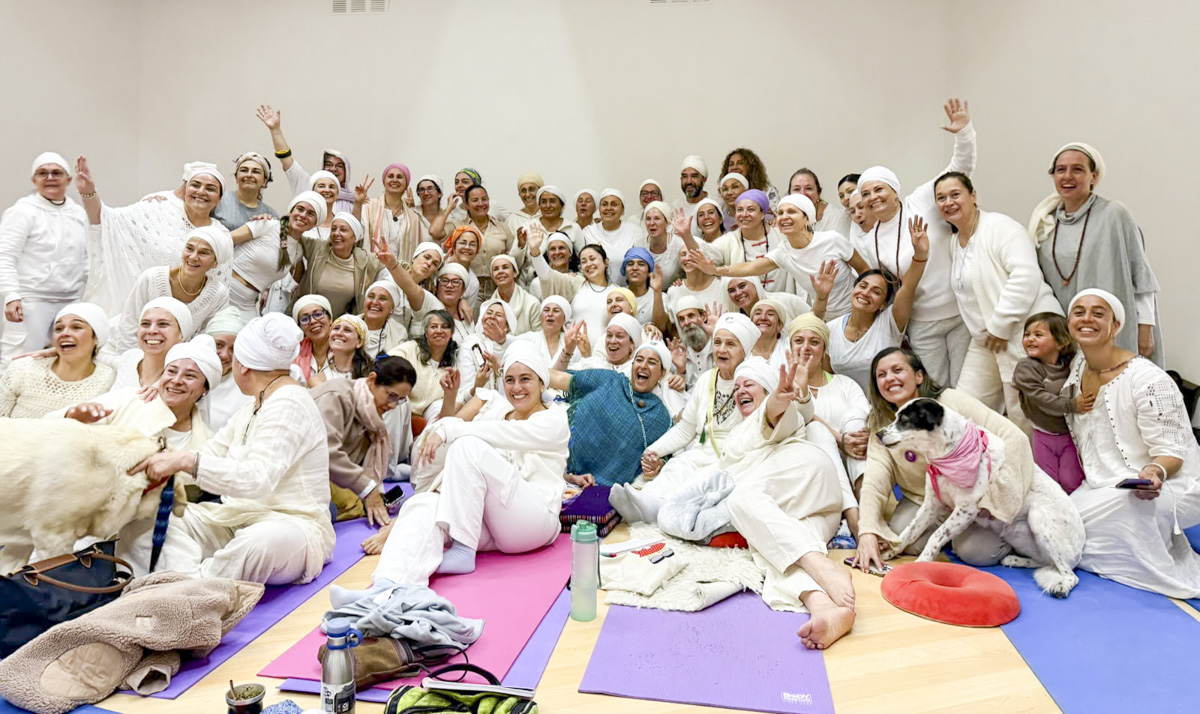
Eleven countries were represented during the four-day gathering.
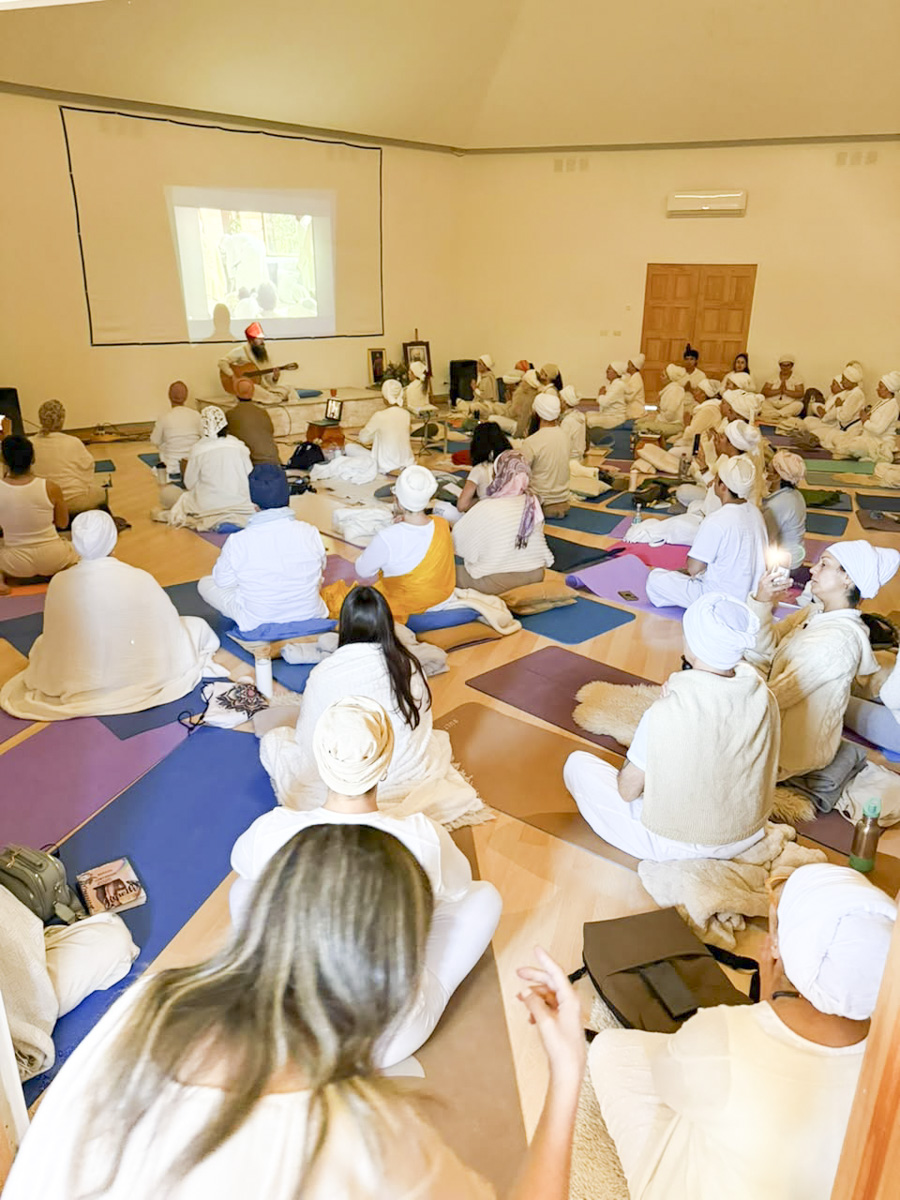
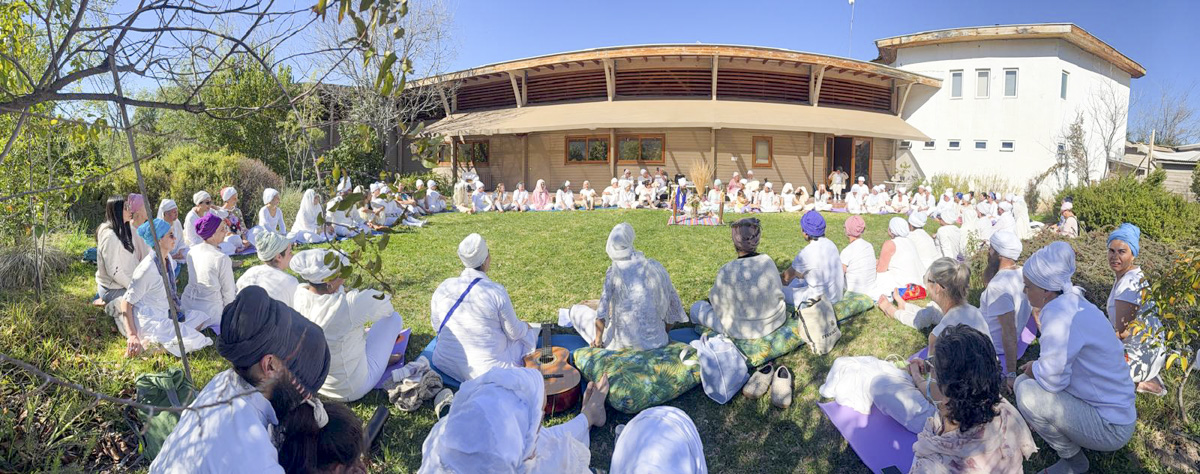
For Four Days, Teachers Became Students Again
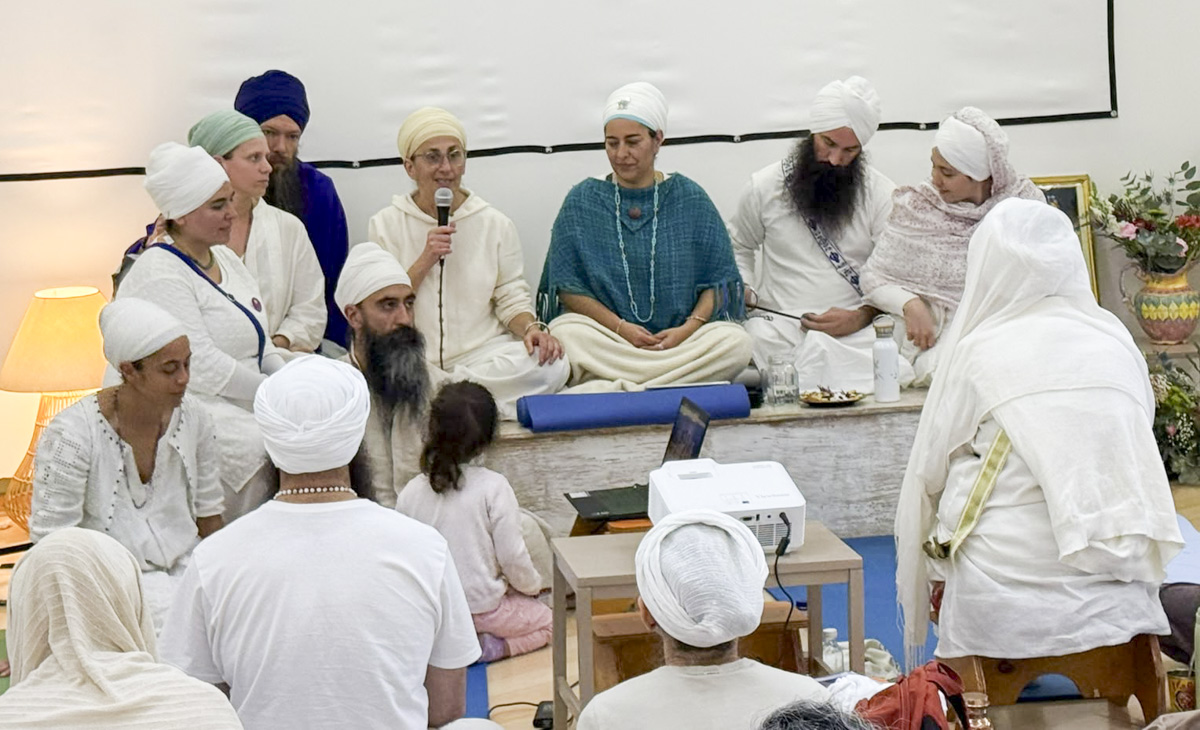
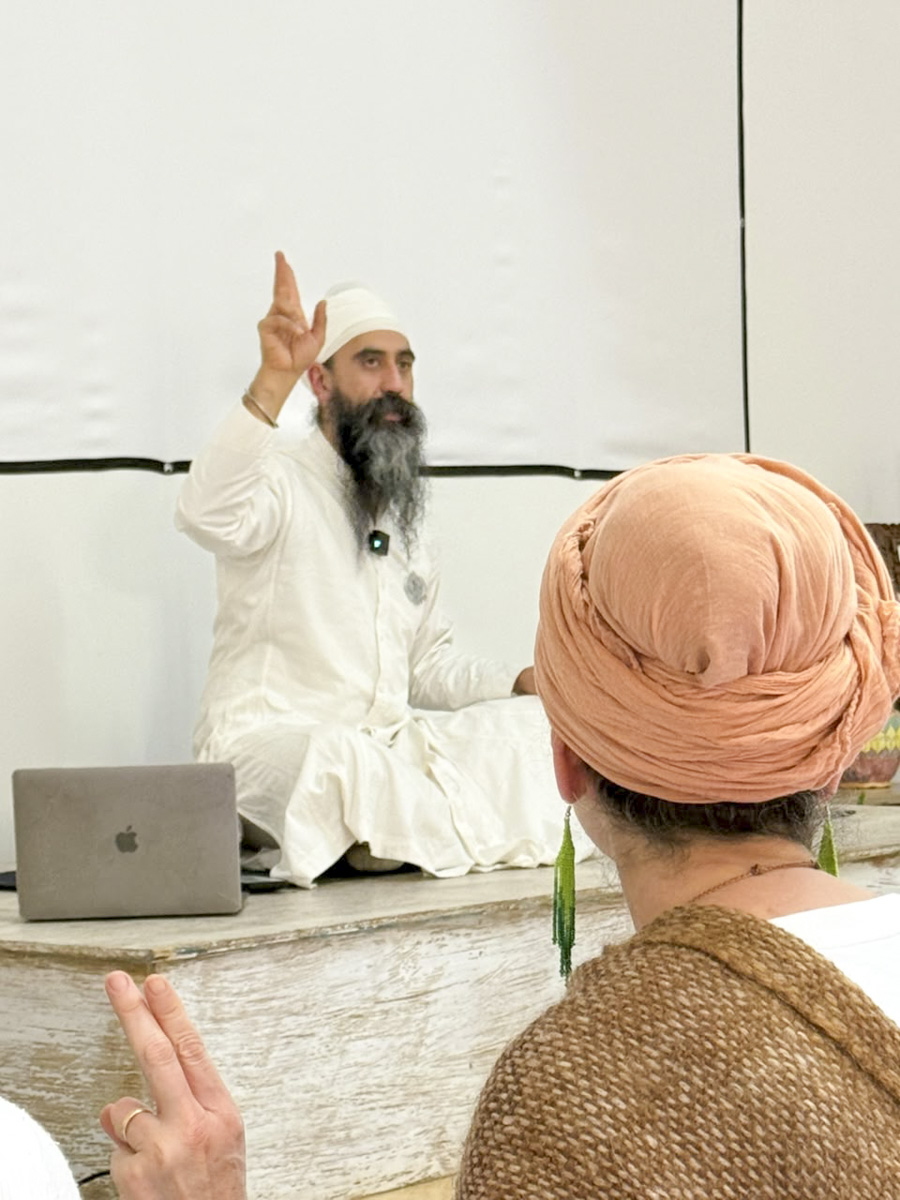
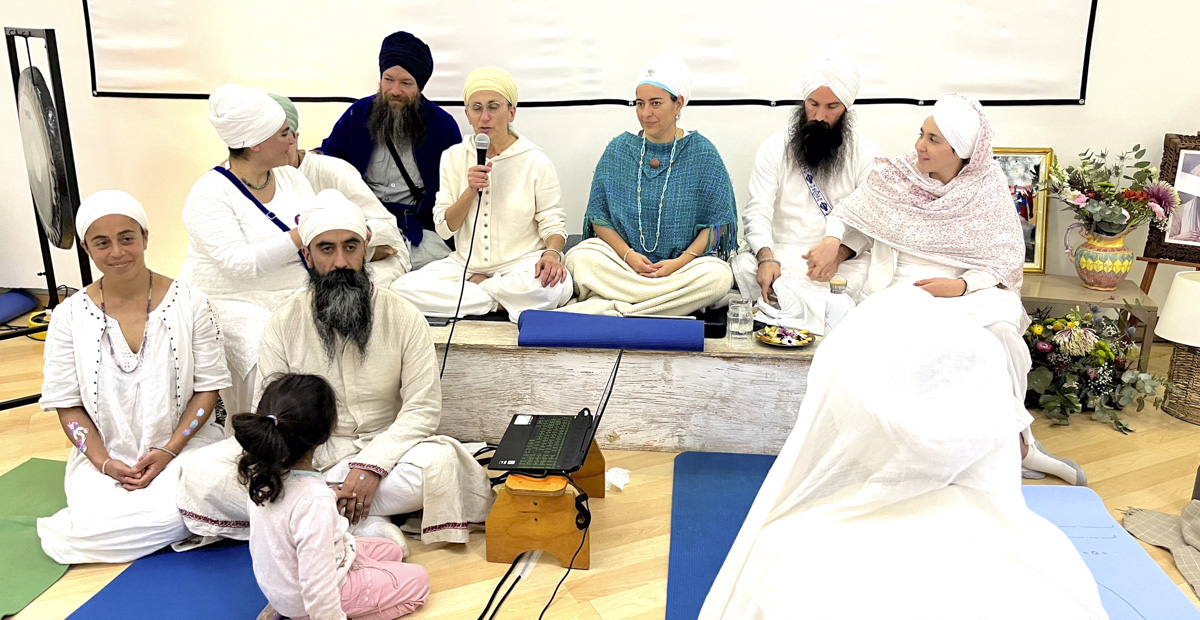
Each area of study began with a class led by an experienced teacher who introduced and explored the subject with the participants. That class carried the kriya and the practice connected with the theme.
Immediately afterward, the group entered into an archival video class with Yogi Bhajan teaching directly on that same subject. Sometimes the teaching was followed by a meditation practiced with him; sometimes it was the lecture alone. The combination varied with the subject.
The contemporary teacher opened the subject and helped create the context. Then participants went directly into the original teaching and experienced it together.
This format was repeated throughout the four days.
The program moved through three main areas:
- The Caliber of a Kundalini Yoga Teacher
- The Communication of a Teacher
- The Golden Chain
- The Wisdom of a Teacher.
As Yogi Bhajan said:
Guru Nanak bestowed on Baba Siri Chand the Guruship of the Udhaasee side. That is why we have 3HO, the responsibility to teach Kundalini Yoga to the point of experience.
— Yogi Bhajan, 10/3/02
Watch the Original Classes from the Congress
These are the original teachings participants watched and practiced with as they explored the caliber, communication, wisdom, and responsibility of a Kundalini Yoga teacher.
From Certification to Caliber
One of the strongest themes of the program was caliber.
The material did not describe caliber simply as how much a teacher knows. It connected caliber with identity, projection, resilience, courage, patience, communication, dignity, discipline, and the capacity to remain steady enough to serve and elevate another person.
One of the Yogi Bhajan classes included in the Congress expressed the distinction very directly:
“You can be certified as a Teacher, but you may not have the caliber of a Teacher.”
—Yogi Bhajan, The Caliber of a Teacher, July 31, 1996, The Master’s Touch
But standing in front of another human being requires something more.
Can you stay present when a class becomes difficult? Can you communicate something that you have experienced rather than simply something you have learned? Can you remain steady when you are unsure of yourself? Can you guide other people without your own insecurity becoming the center of the experience?
And can you create enough trust for another person to enter deeply into their own practice?
Those capacities are difficult to develop through information alone.
They require experience.
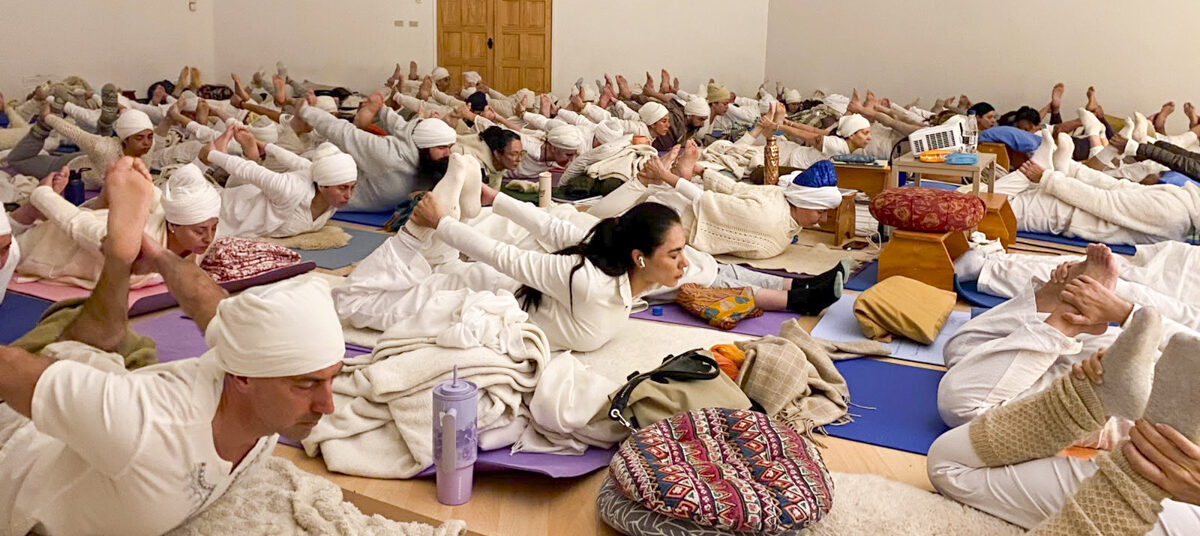
Congress approached caliber through the identity of the teacher: the ability to move beyond the accumulated personality, reactions, insecurities, and personal history so that something deeper can be projected through the teacher.
In other words, the question is not only:
Do I know what to teach?
It is also:
Who am I when I teach?
Creating the Conditions for Deeper Experience
The schedule reinforced that intention.
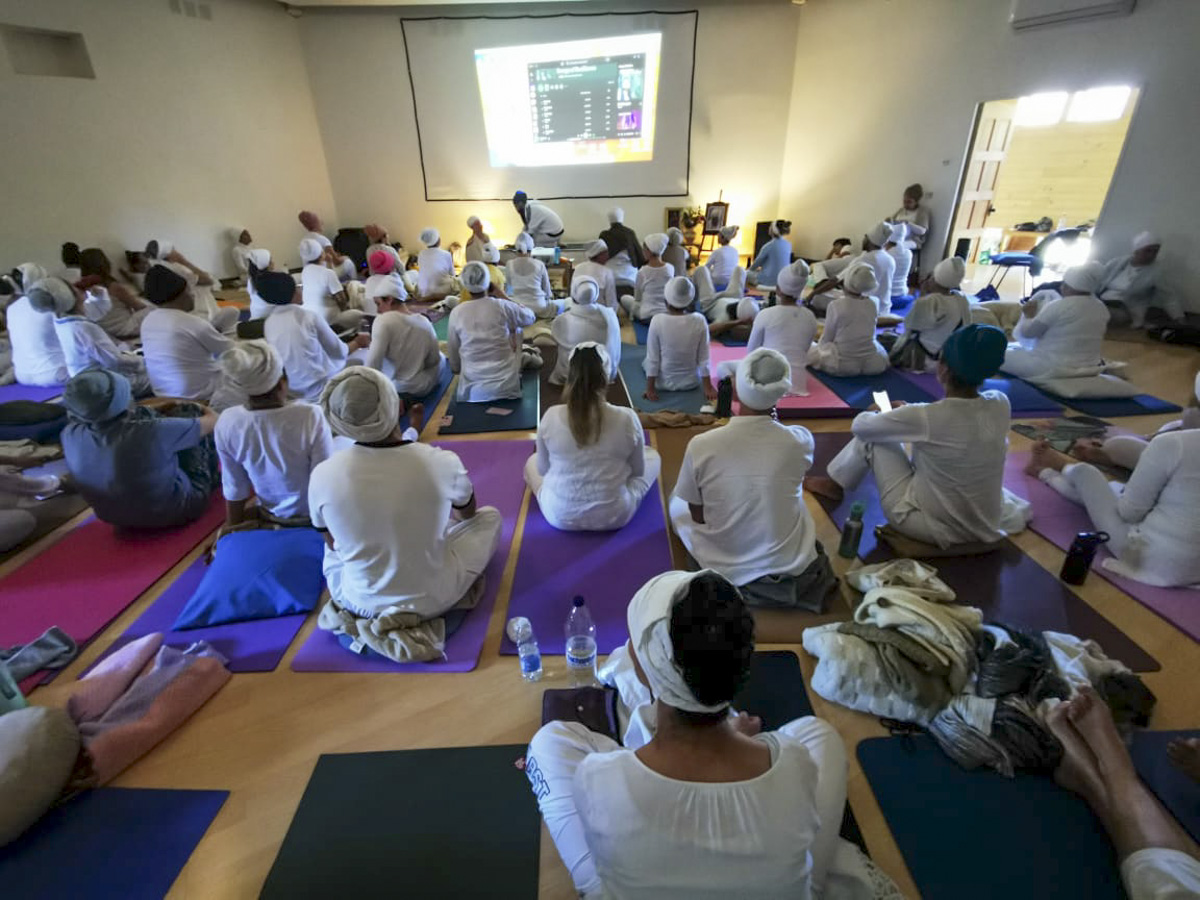
Each morning began at 4:30 a.m. with Sadhana and Gurdwara. Participants then moved through breakfast and long morning and afternoon teaching sessions, returning to that rhythm over four consecutive days.
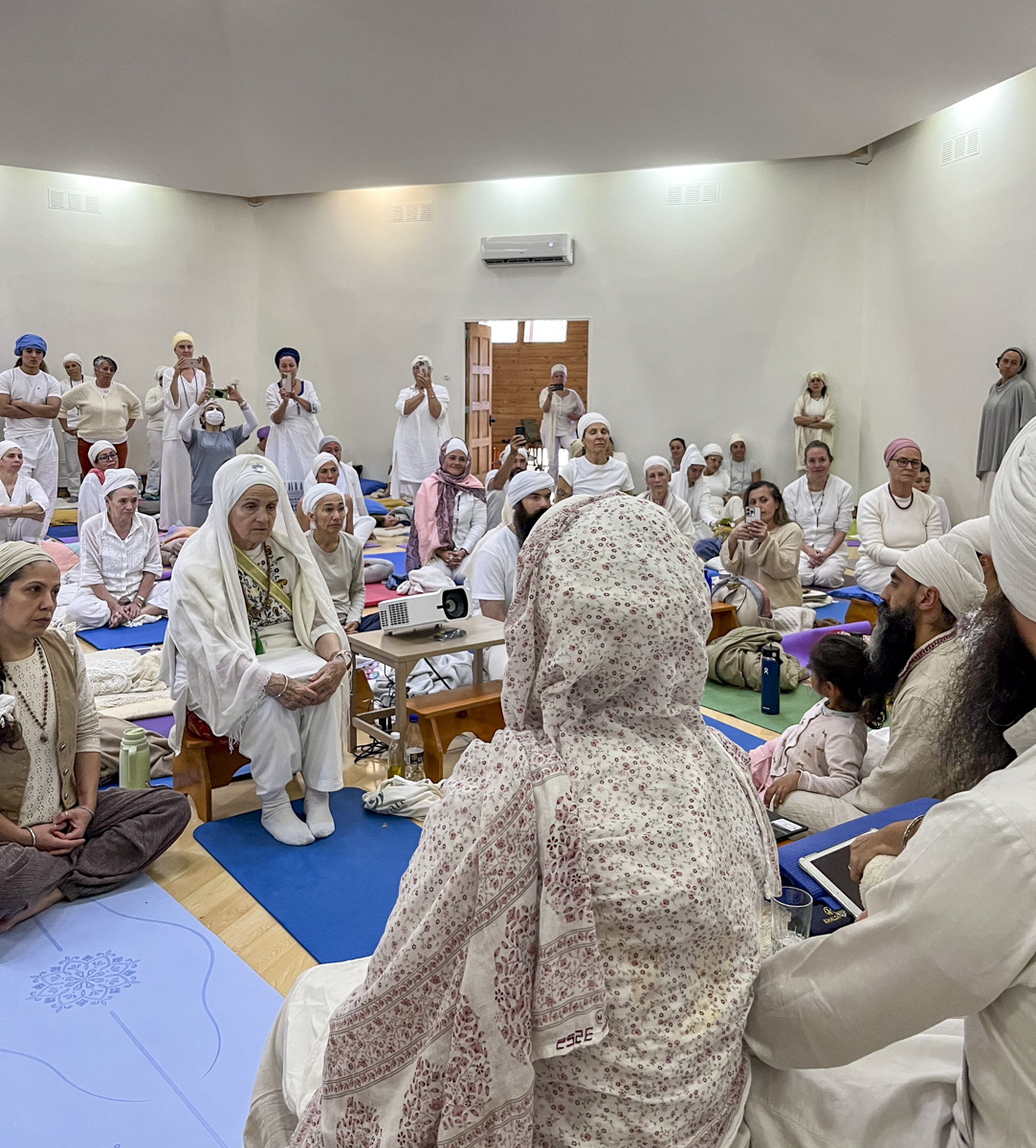
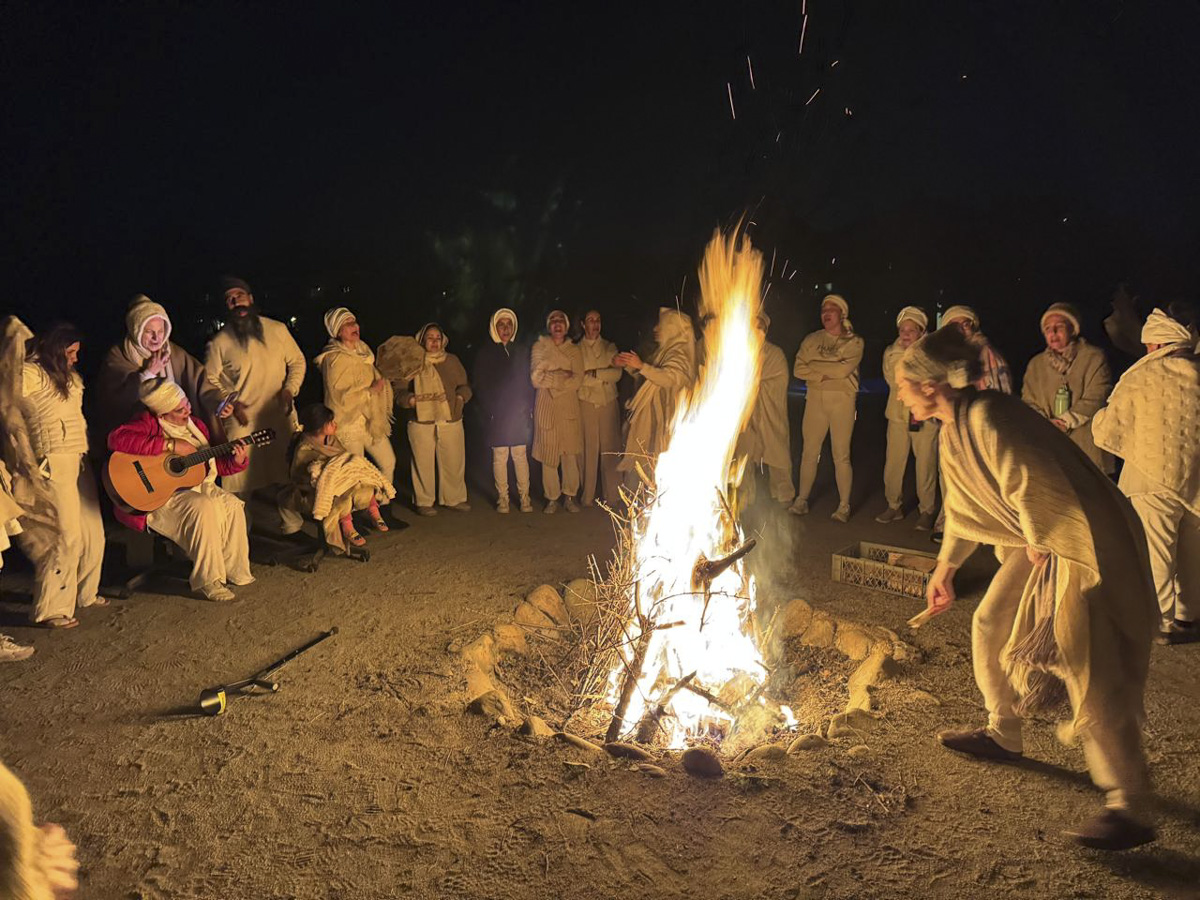
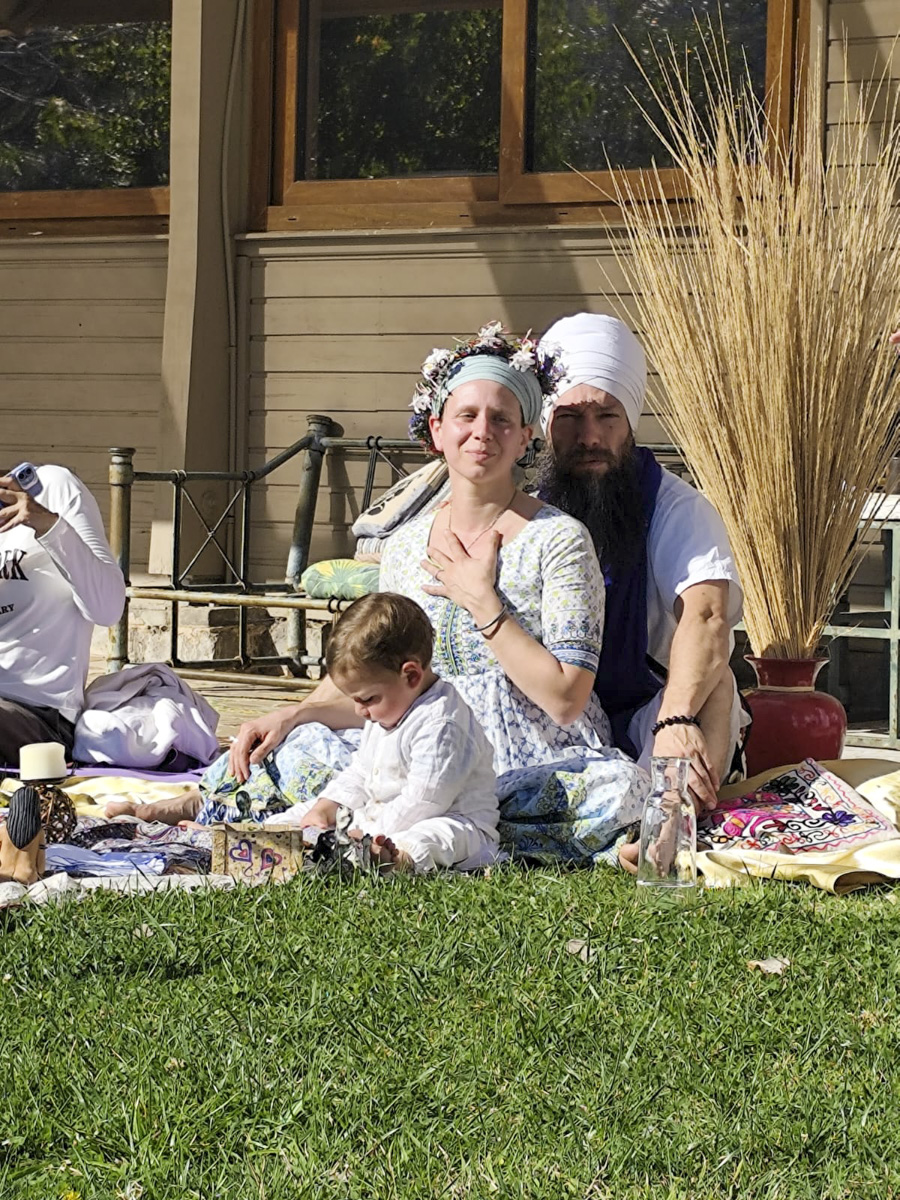
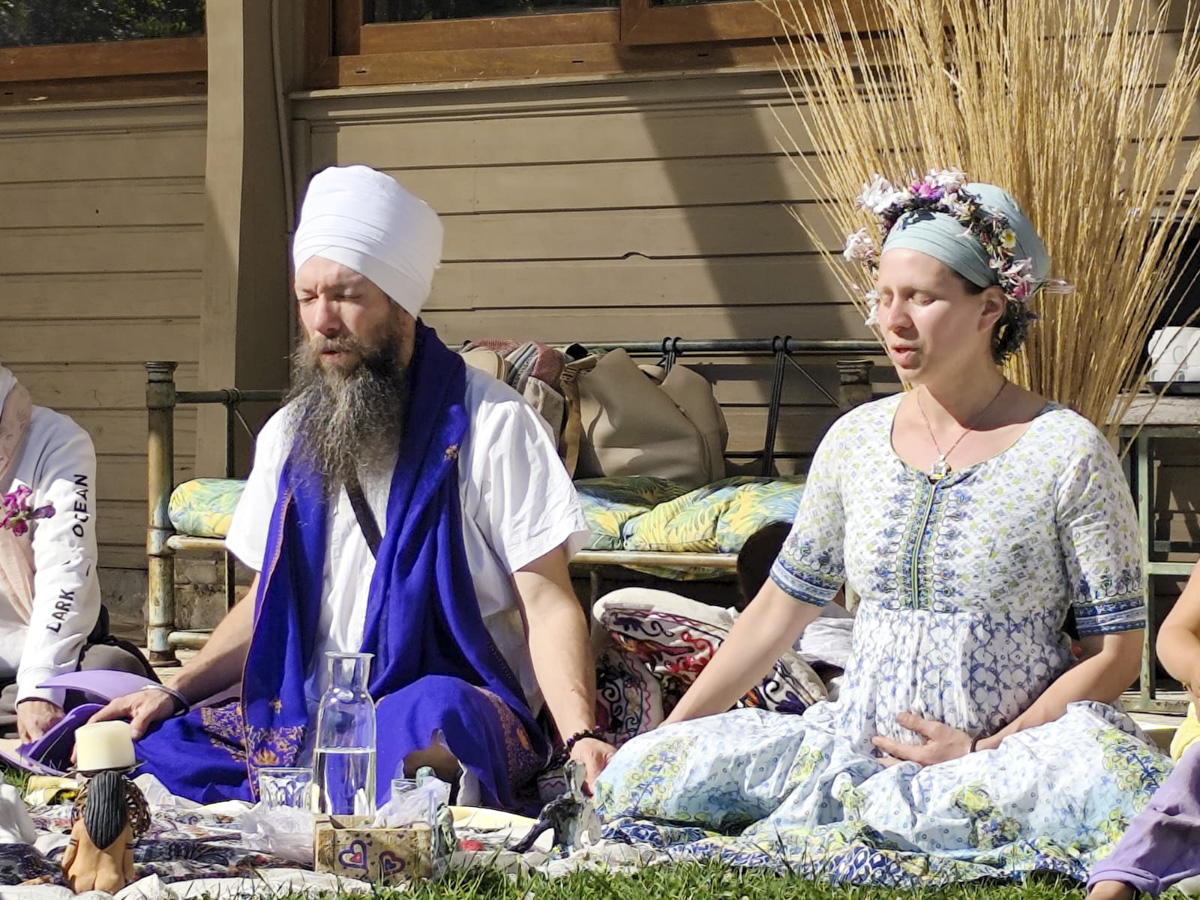
Teachers practiced together. They studied together. They ate together. They began the day together in Sadhana. They entered challenging kriyas and meditations together. And they stayed with the same questions over several days.
The progression of the program was also meaningful.
First came caliber: Who are you when you teach? What are you projecting? What allows you to remain stable and conscious in the role of teacher?
Then came communication: How does that internal state reach another person? What does a teacher communicate through words, presence, behavior, projection, and consciousness?
And finally came the Golden Chain: What is the teacher connected to, and what is the responsibility involved in receiving a teaching and carrying it forward?
That progression moved the conversation from the individual teacher, to the relationship between teacher and student, and finally to the teacher’s relationship with the teachings themselves.
Why In-Person Experience Is Crucial
None of this requires rejecting online learning.
The expansion of virtual and hybrid teaching has allowed people to access Kundalini Yoga across distances that previously would have made participation difficult. It has changed who can enter a classroom and who can enter a Teacher Training.
The question raised by the Congress was different:
There is something learned by sitting in a room with a teacher that is not entirely contained in the words being spoken.
A student observes how a teacher enters the room, how they relate to people, how they respond when someone struggles, how they maintain the rhythm of a kriya, how they communicate corrections, how they hold silence, and how they carry themselves before and after the formal teaching has ended.
There is also something learned by practicing consistently beside other people.
The student begins to develop a lived reference for what it means to be in the role of a teacher.
For students whose path has taken place largely online, opportunities to develop that kind of reference can be fewer.
The Congress was an attempt to intentionally create more of them.
That responsibility toward the student was also emphasized in Yogi Bhajan’s teachings on being a teacher:
“Don’t worry about obnoxiousness, narrowness, abusiveness, negativity and neurosis of a student. Had he not been all that, why should he come to you? So please, when you become a Teacher, serve all, like the sun, which shines on all with light and warmth.”
— Yogi Bhajan, January 8, 1996

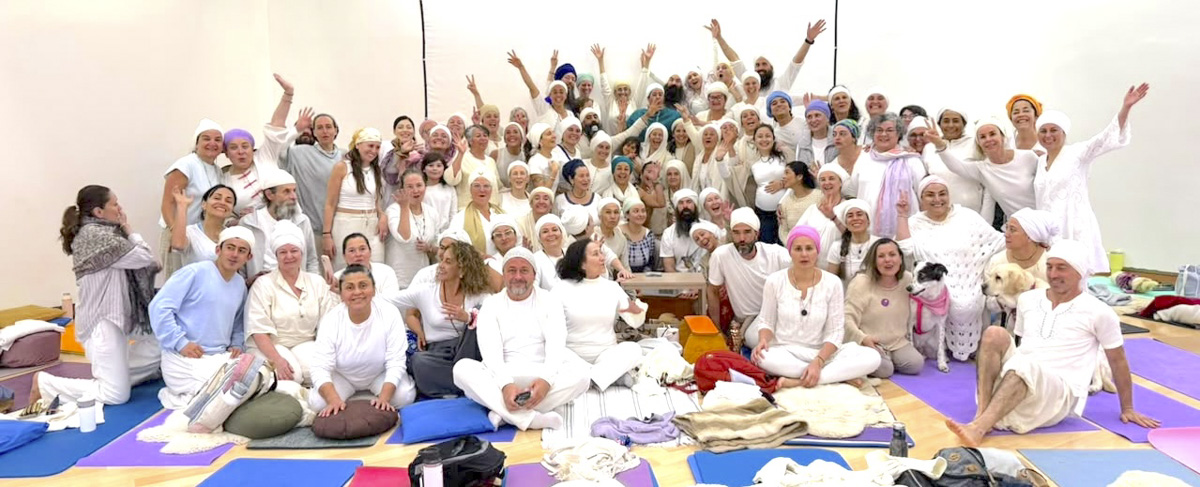
A Question for the Global Teacher Community
Five schools chose to collaborate.
And the question behind that experiment belongs to a much larger teacher community:
As the way we train teachers continues to evolve, how do we preserve the depth of experience that helps a teacher mature?
How do we create enough opportunities for teachers to sit together, practice together, encounter experienced teachers, deepen their relationship with the teachings, and develop the confidence and caliber required to stand in front of others and teach?
One community’s attempt to begin answering the question together.
Tell us in the comments!
What has helped you grow most as a teacher since your certification?
Tell us in the comments, and share this with a teacher who would recognize the question.

Comments (20)
Nam Nidhan Kaur Khalsa
Thank you, Rai, for your comments, which truly reflect what we have experienced.
I would only like to add that this becomes possible when we are able to let go of concerns about “territory,” competitive thinking, and the economic dependence that can come from making teacher trainings our primary source of livelihood.
When these concerns no longer determine our actions, and what matters most is simply doing what is right—creating spaces of community, support, and continued growth for the teachers we have trained—then something deeper becomes possible.
We begin to lead by example. We step beyond the boundaries of “our own territory” and open ourselves to the larger community. In doing so, we begin to live authentically what the second level of a yogi’s consciousness represents: group consciousness.
There is no time to lose in smallness, divisions, or protecting personal territories. We need to become an immense collective force—a refuge for healing, service, and a heart without borders. And that can only happen when we come together.
The world needs to see us living with the same coherence that we ask of others through what we teach.
Alone, each of us can do something meaningful. But together, we become an ocean—a vast, living heart capable of holding and serving many more.
Har Tirath Kaur Khalsa
Waheguru! Ha sido maravilloso poder compartir la enseñanza con tantos profesores deseosos de continuar creciendo y experimentado comunidad tal como lo lego nuestro querido Maestro SSS Yogi Bhajan.
Lakshmi Vedya Kaur
Que el programa de profesores 1 sea híbrido es crucial ya que nos permite a los que vivimos más lejos tener contacto con estas enseñanzas tan valiosas en la era de acuario.
Gracias a todo y cada uno de los profesores que hicieron posible la sucesión de las palabras del maestro en este Congreso presencial, por muchos años más. Wahe Gurú!!
Simran Shakti
Gracias Rai por este artículo que transmite claramente y con calidez lo que vivimos en el congreso de profesores. Fue una experiencia enriquecedora, inspiradora, que en lo personal, me ayudó a recalibrarme a reafirmar la importancia de estar en comunidad, de practicar, aprender y enseñar en comunidad.
Lo que más me ha ayudado a crecer como docente fue enseñar desde que me certifique y mantenerme en mis clases, que son presenciales, vengan 10 o 1 alumno. Siento que la cadena dorada me sostiene. Además, darme cuenta de la importancia de encontrarme con otros profes de kundalini para seguir creciendo y aprendiendo. Wahe guru
Maria Sandra Menoyo
Sat Nam! Ji! Gracias 🙏🏽
Personalmente el compromiso constante , la relación con Dios como prioridad , no bajar los brazos , ser anónima , silenciosa y agradecida!
Compartir la s enseñanzas con fe y más allá de cualquier dificultad, caminando , observando y aprendiendo!
Manuel Martínez Sobrado
Sat nam ✨ la experiencia directa de compartir esos días de retiro a los pies de Los Andes continúa reverberando en mi alma. Mi corazón se siente expandido.
Cómo maestro de yoga siento que lo que podemos transmitir es el amor por quienes somos. En lo particular practicar el servicio me ha abierto el corazón y me ha acercado a Dios. Es una sensación frecuencial que baña mis días de dicha y que me alinea cuando la vida se torna desafiante.
Agradezco a mi maestra Nam Nidhan por haberme transmitido tan profundas enseñanzas y a todos los seres luminosos con quienes hemos compartido tan fructífera jornada.
Sat nam 🙏 Wahe gurú ✨
Manuel Martínez Sobrado
Sat nam ✨ la experiencia directa de compartir esos días de retiro a los pies de Los Andes continúa reverberando en mi alma. Mi corazón se siente expandido.
Cómo maestro de yoga siento que lo que podemos transmitir es el amor por quienes somos. En lo particular practicar el servicio me ha abierto el corazón y me ha acercado a Dios. Es una sensación frecuencial que baña mis días de dicha y que me alinea cuando la vida se torna desafiante.
Agradezco a mi maestra Nam Nidhan por haberme transmitido tan profundas enseñanzas y a todos los seres luminosos con quienes hemos compartido tan fructífera jornada.
Sat nam 🙏 Wahe gurú ✨
Seema Kiran
Fue una experiencia única participar por primera vez en este Congreso de Profesores de Kundalini Yoga. Recién me había certificado y llegué con mucha ilusión, pero realmente superó todas mis expectativas.
Todo fue impecable: ¡los maestros, qué calibre! 🙌✨ Gracias a cada uno de ellos por compartir sus enseñanzas, las kriyas y las sadhanas con tanta generosidad.
Gracias por crear este espacio de conexión de almas entre profesores. Aprendí muchísimo, conocí personas increíbles y, sobre todo, este encuentro me inspiró a retomar mis clases de Kundalini Yoga para seguir compartiendo estas experiencias y llegar a más personas, teniendo el SEVA como propósito principal. 🙏💫
Me llevo grandes aprendizajes y, sin duda, una experiencia muy especial en el corazón. ❤️
¡Magnífica publicación, Rai! Gracias a todos. De verdad, qué hermoso tener la oportunidad de conocer y compartir con maestros de diferentes escuelas, conocer sus caminos, sus enseñanzas y sus experiencias. Una gran oportunidad para seguir aprendiendo, creciendo y compartiendo. ✨Sat Nam 🙏✨
Gurudevta Kaur Khalsa
Las 5 escuelas que nos unimos hemos creado nuestras comunidades, que muchas veces compartimos. Pero todos venimos de un mismo linaje y de hecho, nos sentimos como una familia espiritual ( también en lo personal, nos conocemos hace muchos años).
El trabajo individual de cada uno como maestro y la devoción a la cadena dorada es lo que nos movilizó a escuchar este llamado.
Para vivir en Sangat.
Seva, simran y Sangat son una de las invitaciones más poderosas que hemos tomado en este congreso para trasmitirlo a un grupo increíble de profesores de diferentes países.
El calibre, la comunicación y la cadena nuestras líneas principales de profundización y el próximo año esto va a continuar siendo un espacio de recalibración para toda la comunidad.
Profundamente agradecida de cada uno, de la cadena dorada y la oportunidad de servir con algo calibre.
¡Qué dicha!
Gurusansar Singh
Sat Naam,
It was indeed a most inspiring experience.
It felt like a collective effort to bring back the golden age of Kundalini Yoga, which all the hearts vibrating at the same frequency of Sat Naam.
You could feel the longing, the Bhakti in the air, do connection and meaning, and the total commitment to the beautiful legacy of the Siri Singh Sahib.
I feel very grateful of having the opportunity to be a part of this, and I want to express my deepest gratitude and respect to Nam Nidhan, Gurudevta, Vidia Dass, Har Tirath, Sada Anand and Paramsahej for being such shimmering links in the Golden Chain.
Vāhė gurū llī ka ḳhālsā, vāhė gurū llī kī fataha!
Kirat Kaur
Agradecida de la experiencia, de cada instante compartido,de permitirme llegar y hacer presencia, de cada inhalación y exhalación en consciencia y sobre todo de hacer UNIÓN con tantos seres maravillosos que me recuerdan como Dios habita en cada uno de nosotros … Sat Nam🙏💜
Gurusansar Singh
Sat Naam:
Fue, sin duda, una experiencia profundamente inspiradora.
Se sintió como un esfuerzo colectivo por traer de regreso la edad dorada del Kundalini Yoga, con todos los corazones vibrando en la misma frecuencia de Sat Naam.
Se podía sentir en el aire el anhelo, la Bhakti, la conexión y el sentido de propósito, junto con un compromiso total con el hermoso legado del Siri Singh Sahib.
Me siento profundamente agradecido por haber tenido la oportunidad de ser parte de esto, y quiero expresar mi más profunda gratitud y respeto a Nam Nidhan, Gurudevta, Siri Sat, Vidia Dass, Har Tirath, Sada Anand y Paramsahej por ser eslabones tan luminosos de la Cadena Dorada.
vāhė gurū llī ka ḳhālsā, vāhė gurū llī kī fataha!
Debí Gian Kaur
A mis 43 años fue el tiempo de sentir lo que significa la devoción, el éxtasis de mi alma al sentir el amor más profundo dentro de mi ser mi cuerpo se tiende al flujo de la vida, como me emociona la pasión de mis maestros al tener su mayor propósito amar, entregar y servir a Dios, servir a la sabiduría infinita que está disponible para entregarme al servicio del amor, nunca olvidaré a la maestra, preferiría morir que renunciar, llena de coraje.
Nos amo🙏☺️
Tara Navgeet Kaur
Amada Sangat gracias infinitas, están presentes en mí en cada clase, al abrir el espacio con el Adi Mantra me traslado a la magnificencia de oírnos a todos juntos, con tanta dicha y devoción entonándolo en el Congreso. Ese coro sagrado sigue reverberando en mí y me hace sentir en la propia piel el anclaje a la cadena dorada. Gracias a todos los maestros amados de la cadena que lo hicieron posible y gracias al Creador por las sincroDioscidades.
Sat Naam
Ximena Leiva
Todavía no dimensiono todo lo sucedido a varios niveles, más que como profesores, sino como un colectivo de seres humanos vibrando muy alto en conjunto, fue hermoso y victorioso, a los pies de la mágica cordillera de Los Andes, de nuestros ancestros, lo sentí vibrante y eso aún permanece en mi memoria, como haber pasado un curso importante, no
Importa el nombre, solo el espacio presente que se hizo infinito en un momento y lugar…
Sat Nam, muchas bendiciones y gratitud a los organizadores 🙏🏻
Harjeet Kaur
Inmensamente agradecida por haber tenido la oportunidad de participar en este congreso de profesores de Kundalyni ,que nos ha unido e inspirado potentente a cada una de las personas que alli estuvimos ,en union con Dios nos volvimos a sentir conectados con la cadena dorada y justo en este momento tan importante que estamos viviendo en el mundo , siento que este encuentro ha sido el comienzo de algo mas grande y transformador ,para transmitir a todas las personas que asi lo quieran recibir , fueron dias que hubo revelacion ,que se sintió mucho amor , union ,armonia ,coherencia y verdad !
Gracias por esto tan hermoso
Hilda Barrera
Gracias @~Rai Singh y cada una de las escuelas que lograron está Sangat. Me siento muy honrada de haber participado en este Congreso de Profesores de Kundalini Yoga, fue una experiencia muy expansiva en muchos ámbitos. Toda experiencia vivida llevo a responder muchas dudas y comprender que este camino es un tremendo desafío y estoy completamente dispuesta a seguirlo🙏🏽🫶🏽 agradezco especialmente a mis queridos Maestros Parsmsahej Singh y Sirisat kaur 🪷 han calado muy hondo las enseñanzas y cada una de ellas que me remueve la llevo a mis estudiantes. La práctica ha Sido mi mayor regalo, me siento dichosa de llevarlo acabo.
Arjan Kaur
Savitri Deva kaur
Muchas gracias Rai por este hermoso artículo. Fue tal cual lo mencionas un encuentro enriquecedor y muy sentido. Recordar quienes somos y a que hemos venido. Agradecida a mis maestros y feliz de pertenecer a la Cadena Dorada. Wahe guru !
Harsimrat Kaur
Sat Nam…Gracias Rai por este artículo que resume amorosamente lo vivido en este Congreso. Desde que me senté por primera ves en una tarima hace mas de trece años voy creciendo e incorporando conocimiento clase a clase. Siento al Maestro y todos quienes caminan y sostienen la Cadena Dorada en cada respiración, palabra, ejercicio, mantra que cantamos para ir adquiriendo la humilde sabiduría de servir a todos.
Y con respecto a la presencialida, es muy importante seguir convocandonos uno a uno, el abrazo no se puede perder, el corazon estalla y se completa.
Gracias Gracias Gracias a todos los Maestros que se comprometieron para que esto fuera posible.
Sigamos caminando juntos.
Harsimrat Kaur
Espacio Gobinde
San Carlos-Uruguay
Pavan Priya Kaur
Sat Naam!! Gracias Rai por esta publicación y a los organizadores de este hermoso e inspirador evento.
Fueron días indescriptibles en que pudimos compartir en Sangat, mirar y abrazar a nuestros hermanos y hermanas de camino. Transitar desafiantes prácticas y simplemente… estar… en este espacio que se siente tan acogedor, en donde todo se vuelve perfecto.
Gracias, gracias, gracias!!!
Wahe Gurú!!