
IKYTA history began quietly, at Solstice gatherings in the early 1990s, and grew into a global professional association for KRI-certified Kundalini Yoga teachers. This guide traces that path — from a grassroots newsletter to a worldwide teacher community — and shows how the same founding vision still shapes IKYTA today. If you teach Kundalini Yoga under KRI certification, this is the story of the home you belong to.
The Grassroots Beginning (1992–1994)
In 1992, Nam Kaur Khalsa began meeting with teachers from around the world at Solstices and the Kundalini Yoga Teachers Conference. She wanted to know one thing: what kind of support did they need to teach well? That question produced a simple newsletter — no graphics, just text — and the first Teacher Enhancement Workshops.
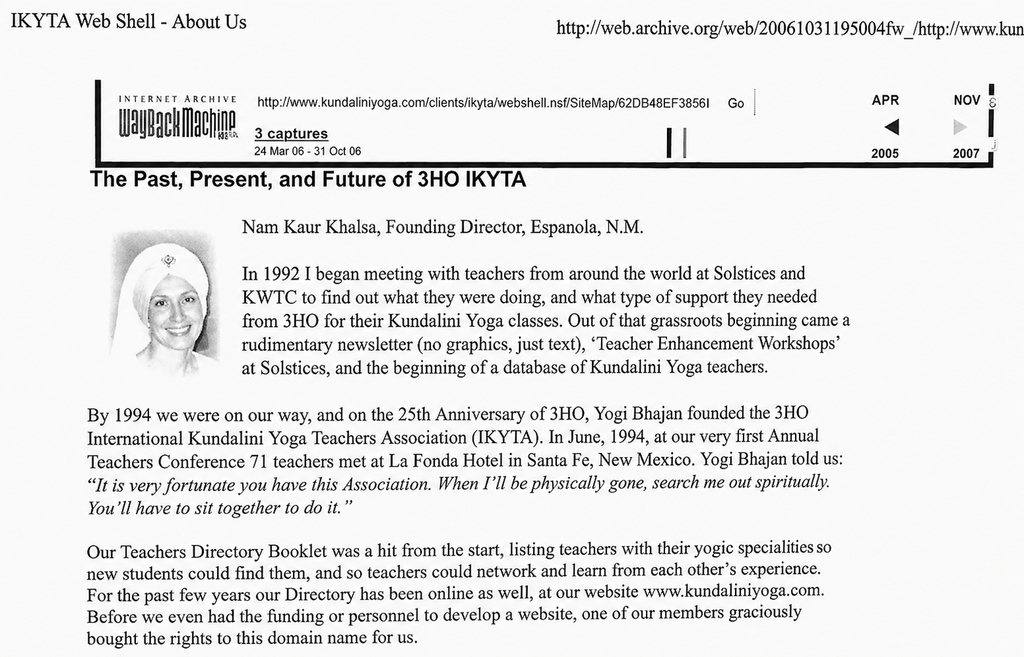
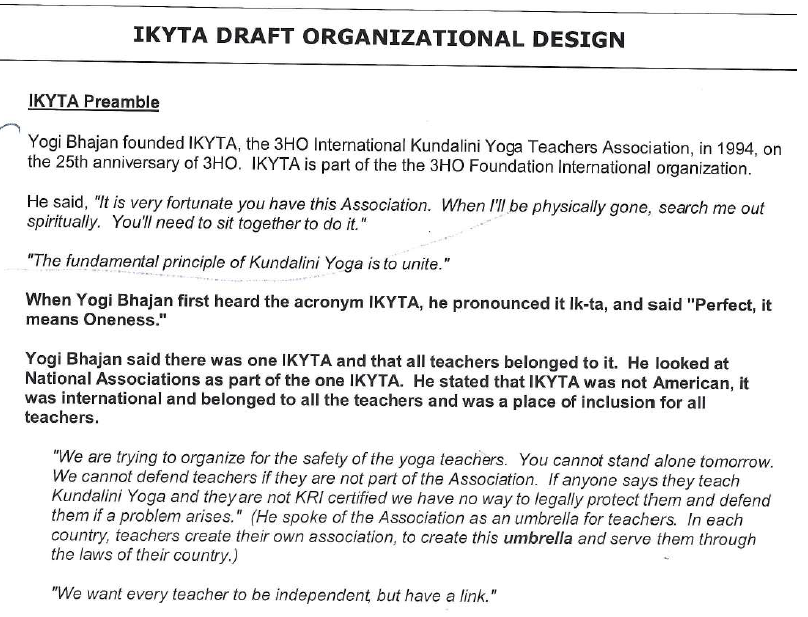
By 1994, on the 25th anniversary of 3HO, Yogi Bhajan founded the International Kundalini Yoga Teachers Association. That June, 71 teachers gathered for the first Annual Teachers Conference at La Fonda Hotel in Santa Fe, New Mexico. Yogi Bhajan told them plainly what the Association was for: they would need to sit together, because one day he would be gone, and they’d have to search him out spiritually instead.
The Teachers Directory Booklet followed soon after, listing each teacher’s specialty so students could find them and teachers could learn from one another. See our current Teacher Directory to explore that same spirit today.
The First Teachers Conference and the Code of Ethics
That first conference wasn’t just a reunion — it set the terms for everything that followed. Working with an Advisory Committee from Europe, Mexico, and Canada, and with Yogi Bhajan directly, IKYTA created a Code of Ethics for Kundalini Yoga teachers.
Building Standardized Certification
Standardized teacher training was one of Yogi Bhajan’s central goals for the Association. Out of that push came the three levels of KRI Certification still in use today. As he put it in 1996, the days of sending someone out to teach with no course for the common person were over: every teacher now needed a written exam, documented files, and a graduation record that could stand in a court of law.
“We must produce teachers who can teach. It must stand in a court of law. There must be a written exam, files kept on each student, and graduations.”
— Yogi Bhajan, 1996
Honoring Elder Teachers Through Grandfathering
Many respected teachers had taught for years without formal KRI certification. To honor that experience, IKYTA developed a Grandfathering process, certifying almost 300 teachers whose creativity and consciousness were clear in their written exams
Growing Into a Global Association
IKYTA’s structure kept evolving as the teacher community grew past its original borders.
Separating From KRI, Returning to 3HO (2005)
By 2005, IKYTA formally separated from the KRI team and moved back under 3HO, where it had always legally belonged. This clarified a distinction that still matters today: the teachings live within KRI, while the teachers — and their professional home — live within IKYTA.
Expanding Into Europe, Latin America, and Beyond
IKYTA’s Teachers Conferences grew alongside Summer Solstice and the European Yoga Festival, with the first European teacher gathering held after the Festival. A Continuing Education program, aligned with Yoga Alliance requirements, launched for teachers in the US and Canada — a first step toward CEUs recognized across national borders.
Building the Global Teachers Council
As IKYTA’s international membership grew, teachers around the world asked for a real voice in shaping the Association’s direction. The response was the Global Teachers Council (GTC) — the first genuinely representative body where teachers from every region could sit together and set strategy.
The working team identified seven concrete steps to bring that vision to life:
- Co-create a Global Teachers Council with worldwide representation
- Develop a new package of membership benefits
- Restructure IKYTA membership around direct and national-association pathways
- Co-create a new model for distributing resources globally
- Forge stronger relationships with national teacher associations
- Embody and share IKYTA’s organizational principles
- Evolve a new model for collective engagement and decision-making
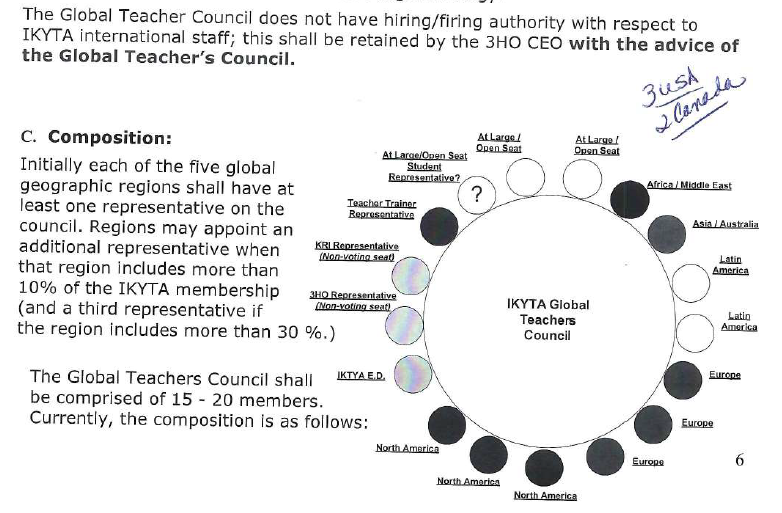
Where IKYTA Is Headed Today
That same founding purpose — teachers serving teachers — still drives IKYTA’s work after certification. Today, IKYTA gives every KRI-certified teacher international professional recognition, validating the training and experience behind their certification for students and organizations alike.
Teacher directories now extend that recognition into visibility: certified teachers can be found by location, language, and specialization, with profiles that showcase their classes and offerings. See our Teacher Directory for an example. Members also gain a genuine global community — network, collaborate, and stay connected with teachers across countries and cultures, exactly as Yogi Bhajan first imagined at those early Solstice meetings.
The Association continues to build lifelong learning pathways — Level 2, Level 3, the 21 Stages of Meditation, and specialty trainings — so that certification marks the beginning of a teacher’s journey, not its end.
Join the Next Chapter
IKYTA’s history is still being written, one teacher and one association at a time. Today the network spans more than 100 countries and 30,000 certified teachers, with national associations representing 20+ countries. See the full list of National Associations.
The work ahead builds directly on that founding purpose. IKYTA is developing shared digital tools — website templates and a teacher directory every association can use — alongside stronger marketing support, deeper cross-association connection, and ongoing visibility for the teachers and associations doing this work well.
If you’re KRI-certified, your place in that story is already waiting.
Learn more about our mission and vision.
